
A Greater Order

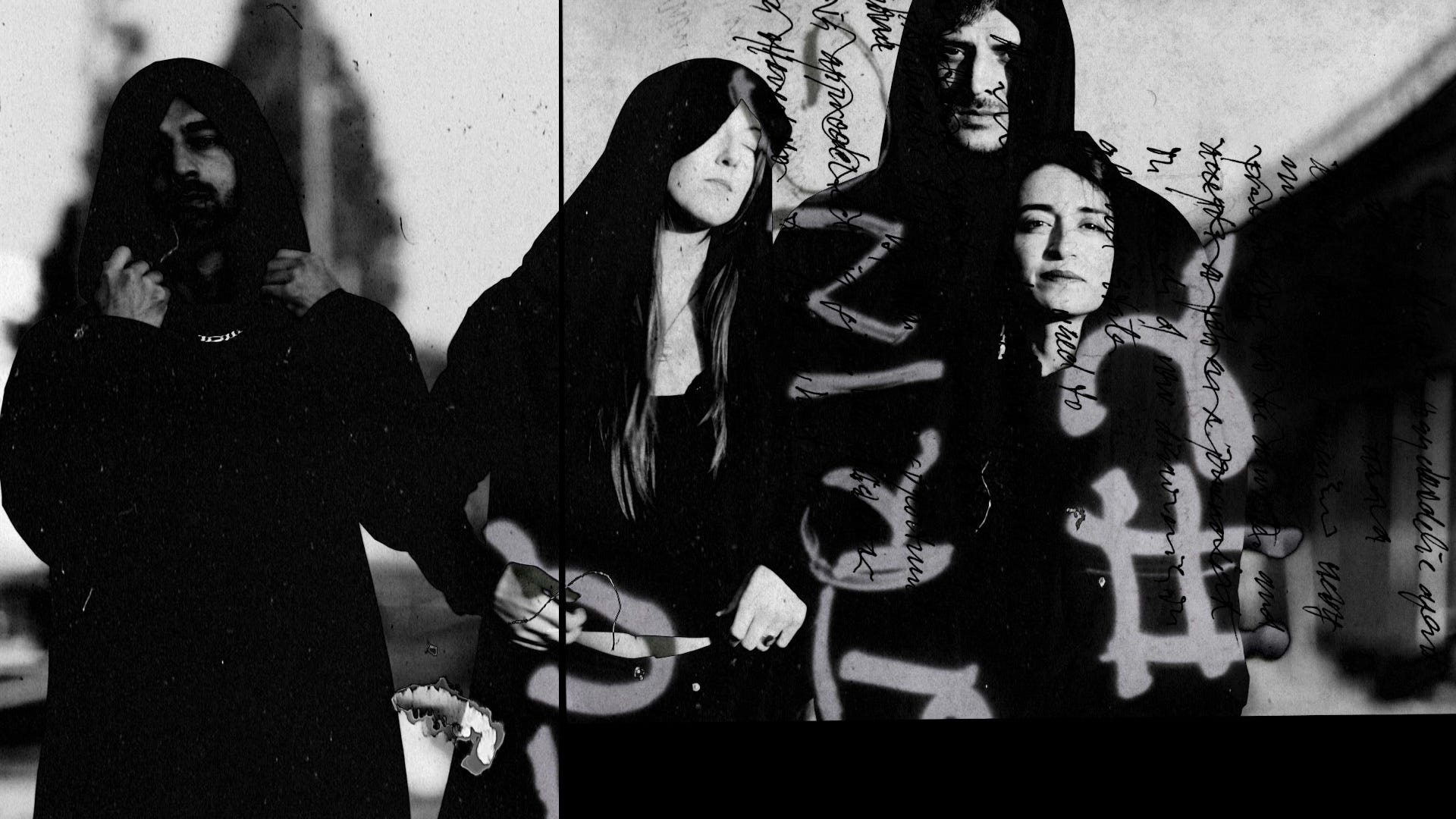
New experiments, mental projections on turned-off televisions and background noise. It’s unclear what we’re seeking or whom. The idea is to unfold some enigma, a revelation, voices or faces of people who disagree with everything, who love and hate with equal force, confusion, devotion, something that defies calculating consequences, like the monologue one repeats thinking it has no effect, that it remains secret. Nothing is a secret, everything is a confession. One day, no substance will be needed—just a thought will suffice to fit perception into a greater order, and then we’ll hit the streets, and supermarkets will seem like galleries of edible art, and gas stations will host parties until dawn. Entire cities will feel like sheds, no longer able to contain us. Incompleteness will cease to be a torment. We continue with the experiments. Some sounds form images resembling heads of mythological animals served on tarnished silver platters. There are images of people fleeing, submerged villages, disputes between lovers who once declared a puerile love. My visions end inside a salon where several women let their hair be dried in silence, absorbed in reading a political pamphlet proclaiming their supremacy.
Kiarash wonders at what point sex should make its entrance in the story, the show, any of its ramifications, whether it is something that is advertised or claimed, like an auction of pleasures and disappointments. I wonder if it's something inevitable like a tumor, or two law enforcement officers pounding on your door because someone gave them an order.
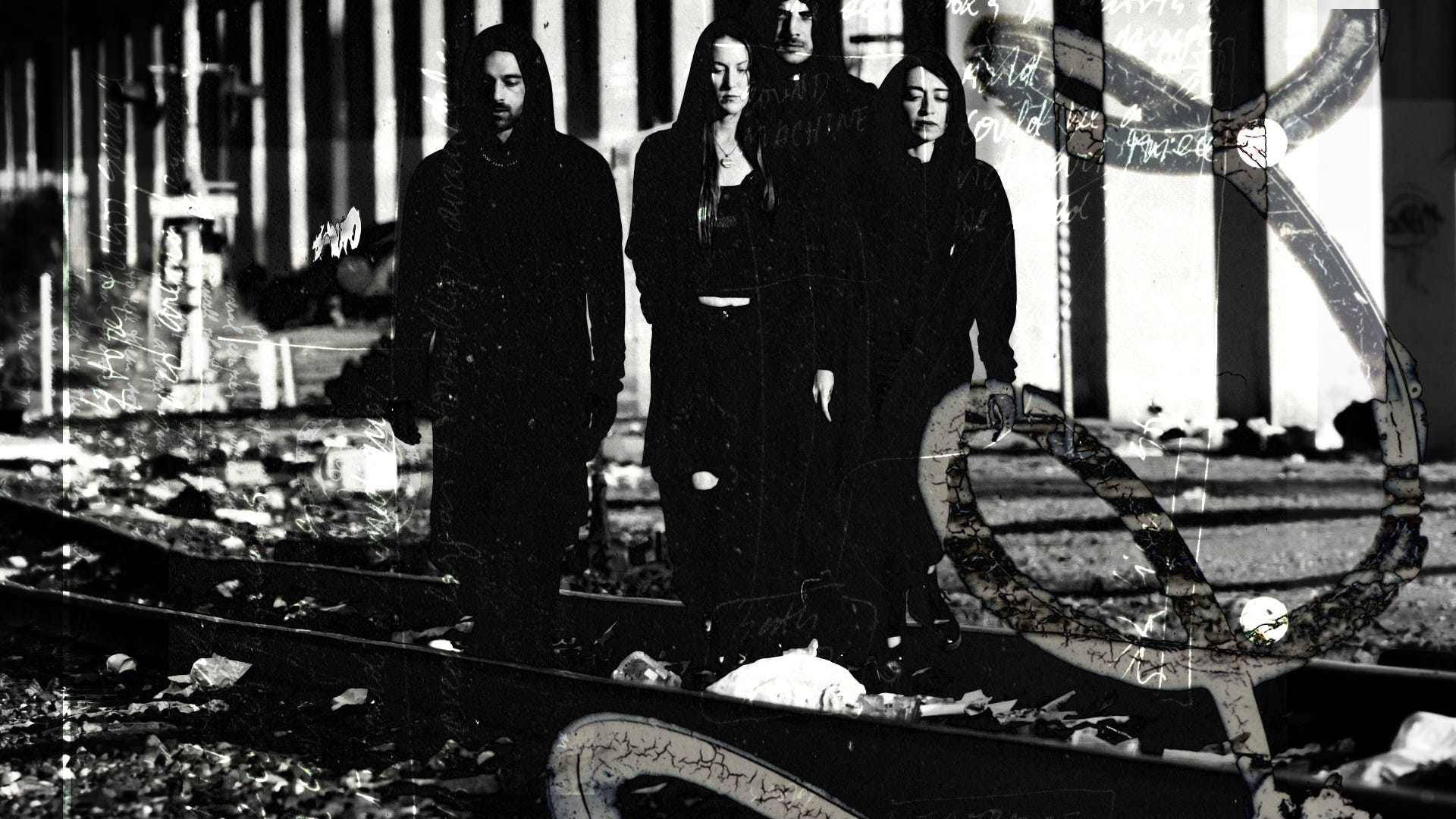
“We’re here to dismantle the tools of biopolitical control that stalk us,” I tell him. “How can sex contribute to our mission?”
“Our mission is peace of mind. Orgies are rituals of salvation. I don’t understand why you make everything so complicated.”
“Everything gets complicated when you think about it.”
“You need to go out and have fun.”
“My idea of fun is building a living room in a car junkyard. Pretending the comfort of a ridiculous life, flaunting an absolute lack of bourgeois values.” The words spill from my mouth effortlessly.
“What the fuck are you talking about?”
“Profound contempt for the mental hygiene suggested by class struggle, chamber music, prudent diets, and TV news, especially the weekend ones that mercilessly exploit sports events.”
“Have you lost your mind? That’s what you call partying?”
“It’s more of a manifesto, but we could bring drinks and invite some people. Some music would be nice, I’m sure you know a DJ.”
“A party in a junkyard? When was the last time you had sex in a car?”
“1985.”
“It’s about time to update that data.” Kiarash visualizes it, embodies it.
“Sometimes I think you have an innate capacity for understanding.”
“Anything else?”
“We’ll need torches. Something primitive, menacing. The kind of utensil that allows to be easily conceptualized, you know what I mean.”
“No one ever knows what you mean. Never. If you want to change that 1985 to a 2025, shut your damn mouth.”
“What about the torches?”
“I got it.”
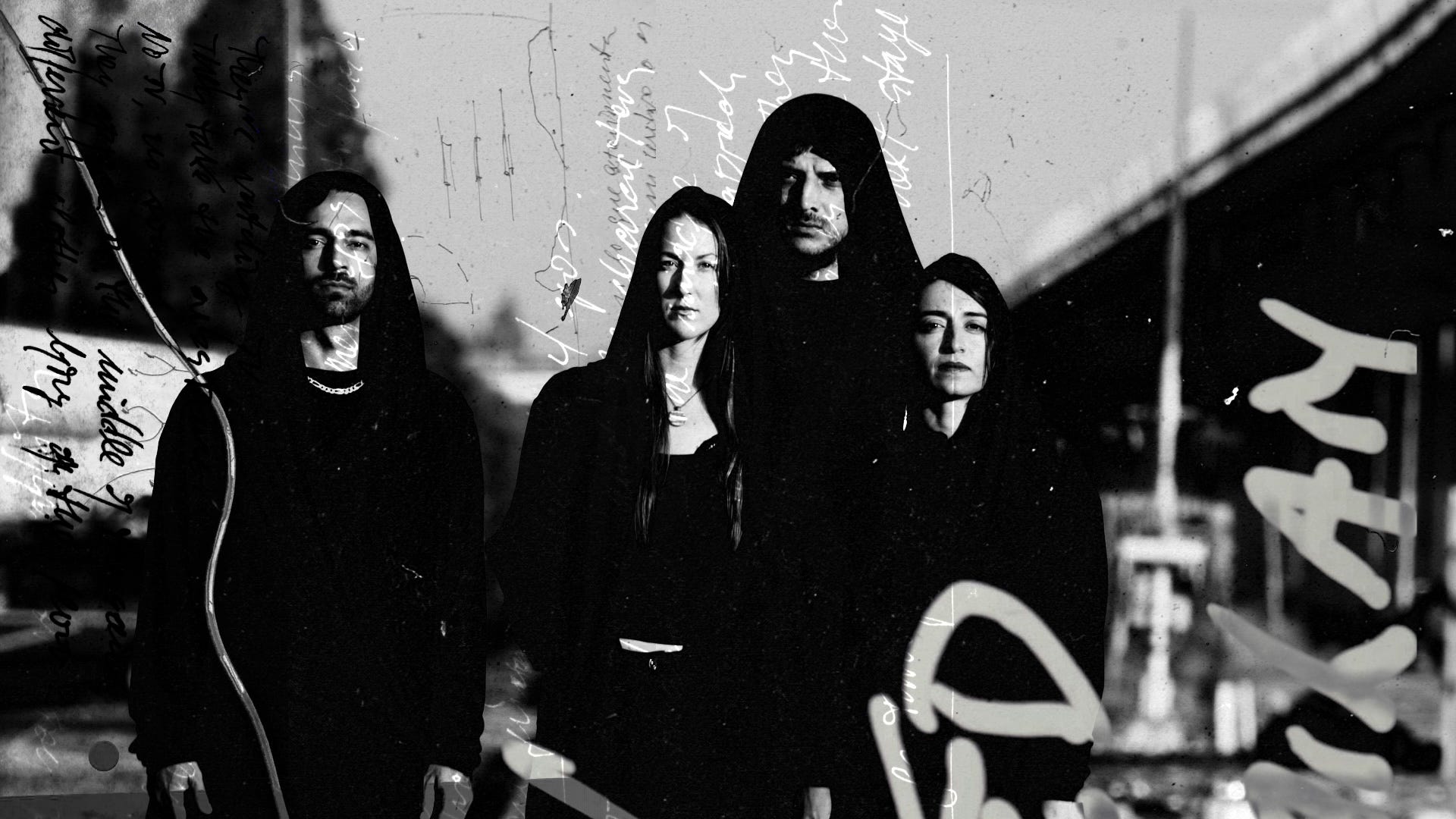
A few days later, I find myself back in Oakland. Disused train tracks, garbage, dismantled memories. Meeting with the agents to shoot their first encounter with the seekers. The place functions as a membrane filtering two worlds, steeped in a stench of rancid fried fish, charcoal, and small dead animals, decomposing the same way frustration decomposes us when faced with what we don’t understand. I ask the agents if they feel their presence as a preverbal or postverbal phenomenon, and they stare at me, stunned. Maybe Kiarash is right, and I need to go out and have fun. The shoot wraps. I keep staring at the tracks as if there were one last train ready to promise something that is not a mirage. There are no more trains.